Monday, May 29, 2017

Media Blog #9


In this blog, I want to talk about the underrepresentation of women in the news and in the media and why it is important that we have more women in the news.

Every night, millions of people tune into the news to see what's going in the world that they live in. The news is perhaps one of the most important and fundamental things in this country, keeping our citizens alert and our government in check. The freedom of the press is one of the things that makes America so special and so amazing, separating it from many countries. Because of the powerful position the news networks are in, it is of upmost importance that they actually give you all the complexities of a story and show all the different sides to it, something that is impossible to do if you have only men in a newsroom.

There is absolutely something to be said for women in the news and what value they bring to the table. Because 51% of the US population is female, looking at a news story through the lens of a women is important to making sure that the news story truly can resonate with all people. Furthermore, not including women in the media alienates the female population, disconnecting them from the news. People tend to gravitate towards people that are like them in gender, ethnicity, etc, so in order to make sure that the female population stays connected to the all important media, there needs to be more female hosts and icons.

It should also be noted that an unequal representation of women on TV has effects on us as a society. As we see more and more men on TV, you are implicitly saying that men are better than women, a message that is sent to children around the country. If you go telling todays children that women cannot achieve as much and be as good as men, you are preventing them from reaching their goals and gaining positions in government and other important institutions. From that generation, more of these implicit messages are sent and the cycle continues. It is a cycle of positive feedback that never ends unless we put a stop to it now.

In all, seeing news through the eyes of women is important to reaching the female audience and an unequal representation of women in the media, news included, leads to more men in power and reinforces the idea that men are superior to women.

Sunday, May 21, 2017

Media Blog #8


This media Blog addresses the idea of "pop" and the idea that movie makers and other entertainment sources use blood and guts to attract audiences. I spend a good amount of time on YouTube, a site used by younger people where content creators can get paid with revenue generated from ads that play at the start of videos. YouTube has skips after about five seconds or so so the advertiser has to hook their audience fast. Again, because the audience is young, advertisers on YouTube often try and use pop to hold their audience which does not generally want to wait until the ad is done. This is exemplified in the case of Alien the Covenant, a movie that has had incessant ads on YouTube for the last month or so.

In the first 5 seconds of this trailer, there are people being possessed or taken over, convulsing and making grotesque noises. If you are unable to resist the first 5 seconds of pop, then you get to witness  more and more of people getting attacked by aliens and getting taken over in addition to some jumpscares. This is extremely stereotypical pop in that in the beginning, they hook you with blood and guts so that we are riveted and the thought of hitting the skip button doesn't even cross our minds. Pop uses blood and guts almost exclusively to hook us fast, something that is shown here. Furthermore, there is pop in the form of sex towards the end when a couple is in the shower, of course ending in true alien style with one being torn inside out by the alien. Because of the pop being shown, we can also clearly see that these people are marketing to teens who would easily fall for the blood and sex shown.

Personally, I'm not a huge fan of the pop in this case. I'm a huge sci-fi fan and love anything interplanetary as it really does capture my imagination, but the excessive blood really puts out that child-like wonder that makes sci-fi so appealing to me. Part of why I love sci-fi so much is that it seems almost real to me. Its basis in science makes it seem like a world just beyond our horizons, something that is actually achievable in my lifetime, and the idea of the fantastical creature Alien makes sci-fi seem less real to me.

In general, I'm not particularly interested in excessive blood being shown or the unnatural marriage between blood and sex. Those kinds of pop just don't appeal to me. Never have been a fan of horror or super sexualized movies or TV shows. Humor is where it is at for me and pop in the form of humor will get me hook line and sinker. If someone can get me to laugh, they have my attention and I might give up a bit of my time to see what they have to say or sell me. Any other kind of pop though, I'm out.

Trailer:
https://www.youtube.com/watch?v=H0VW6sg50Pk
Media Blog #7

I found this article a while back and I thought I would share because the contents and what it talks about is pretty interesting stuff. The article talks about two Syrian brothers and their families that immigrated from the Middle East to New York, families that every week creates a comic strip based off of their experiences living in America and seeing firsthand the racism and intolerance that runs rampant in the country. It found this medium of education (the comic strip) very cool and I think in general, this allows for people to step into the shoes of a migrant and better understand the world that they see.

The comic strip started a while back when one of the brothers received an anonymous message from someone saying that unless he left the country, the brother would have his head chopped off and his family killed. The anonymous caller for good measure made it clear to the brother that he knew where he lived, stating his address. This spurred the families to start writing about their experiences in the new world. As a family, they talk about their experiences as a family and translate them into a comic strip for the paper.

I find this idea intriguing because as stated before, this form of media allows the reader to see what a refugee sees. The fact that it is a cartoon form makes it more digestible and allows the reader to get out of their own shoes and step into the shoes of someone else. I think it is important that media like this exists because if our perception of the world goes unchanged, we will never expand to solve the problems of others because we won't be able to see past ourselves.

There are a lot of messed up people in the world, people that often go unnoticed, and this medium of information allows us to better perceive all that goes on behind the scenes in America, background noise we readily tune out in our heads. I never would have thought to use something so childish like a comic strip to convey important messages about the minority groups in America and the challenges they face. It has certainly made me change how I actively see the world and still challenges my past perceptions of reality.

Article:
https://www.nytimes.com/2017/05/12/insider/times-journalists-use-words-photos-graphics-and-video-and-now-a-comic-strip.html?action=click&contentCollection=insider&module=NextInCollection&region=Footer&pgtype=article&version=section&rref=collection%2Fsection%2Finsider

Sunday, May 14, 2017

Media Blog #6

I recently found this article on the New York Times' website and I found it really cool so I thought I'd post about it.


This article was talking about the creation of a special section in the NY Times Sunday paper by kids that talked about issues they feel are important to the people of America and their views on them. The group of kids is a 4th grade class from Queens where the students are primarily Latino and from low income households. The focus of the section was making the voices of the children heard, the main thing I loved about this and the thing I want to discuss.

I think in the world we live in, we forget some of the most important people surrounding us that can see things in ways nobody else can, the kids. In their innocence and youth, they can see things in a way that older people with calcified beliefs and ideologies cannot. In their innocence, their views can often times be wiser than those of adults. While many people would argue for the benefits in a large military, one of the kids in the NY Times special edition wants there to be more doctors and nurses. Kids also can and will be judgmental and aren't afraid to speak their minds unlike an adult who will filter what comes out of his or her mouth. To see through the eyes of a child is to see the world without bias and obstruction, and that is something we all too often forget. Kids are also observant as well. They pick up on a lot of things that goes over the heads of adults.

The idea that kids are observant made me think of something else as well. In the highly partisan times we live in where everything is politicized and tensions are high between people of differing ideologies, we have to remember that kids are watching. In the Anderson Cooper panel discussions between half a billion angry democrats and republicans, in Fox News segments where the end of the world is near, we need to bear in mind that the children are watching and picking up on all of this. The media needs to lead by example if the next generation is to be levelheaded and be able to compromise.

In closing, I just want to say that I love the idea of giving voice to those that watch but go unheard too often, the children. The idea of it really puts the chaos and political tension around us into perspective, to think that a large portion of the US population isn't thinking about war, but about how were going to combat animal extinction by eating more fruits and vegetables. The media today should take a moment to see things from a child's perspective because it better allows us to see things without bias and makes us think about how we can all change the world to make it a better place.


NY Times Article:

https://www.nytimes.com/2017/05/13/insider/kids-take-over-the-times-opinion-special-section.html?rref=collection%2Ftimestopic%2FMedia&action=click&contentCollection=timestopics&region=stream&module=stream_unit&version=latest&contentPlacement=3&pgtype=collection

Monday, May 8, 2017

Media Blog #5


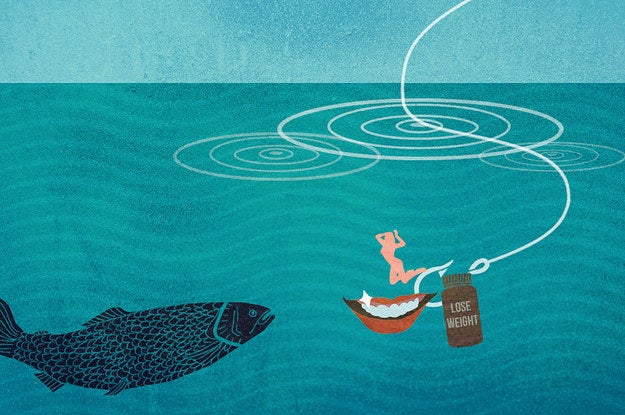
I just want to address clickbait for a minute because it is incredibly annoying and detracts from real content and substance. Personally, it detracts from the experience of "surfing the web" and makes life more annoying and it would make the internet a better place if clickbait were to go away and die in a hole or something like that.

Just for those of you who don't know, clickbait is any online material with misleading titles that make you want to read the story, the only purpose being to get lots of views. Clickbait is often characterized by titles appealing to basic human desires like curiosity, greed, etc. If you want to be able to spot out clickbait without a hitch, look for titles that are vague and suggestive of some kind of revolutionary information or something big.

It adds to the clutter of the media.
There are a lot of links in all websites that allow us to surf the web at blazing speeds as one article or editorial leads to the next, all connected in a web of information. Clickbait is a dead end. Stories with misleading titles that in no way reflect the often lackluster content do not offer a way forwards as often the websites with clickbait articles often only link to more clickbait. Furthermore, as clickbait becomes more and more common on every kind of website, it slowly starts to ebb out articles and websites with actual substance. Just like advertisements and popup ads, it slowly makes using the internet more and more grueling as lines of text become shorter, large margins filled with ads or articles made to distract us. Just as advertising has become more like clutter, clickbait is beginning to clutter as websites competing for your attention have to resort to frequency to try and generate views, spreading to the farthest reaches of the internet for their own space to put their links and trying to squeeze between other content in already crowded websites.

Potentially Damaging the Internet
The internet relies on people contributing and putting new information and news in an accessible location for all of us to see and learn from. The internet relies on a streamlined process through which we can gather this information in order to make it more appealing than a newspaper or a library. As clickbait makes it harder to sift though information and links for real substance, the functionality of the internet is damaged. If the internet becomes too crowded with junk to the point where sifting links to faulty information and news stories takes more time than reading the newspaper or going to a library, people will stop using the internet altogether. The internet relies on the worldwide community all pitching in information and if the community starts to disband, the internet becomes useless. Like a dead social media site.

It Can Be Stopped!
Clickbait is perpetuated because the people that create it are paid by advertisers looking for new places to put up their own ads. The reason advertisers put their ads up on websites with clickbait is because people are stupid enough to click on the links to clickbait. Clickbait is perpetuated by our willingness to fall for it because without the clicks, clickbait isn't profitable. If we all want to stop the clutter of clickbait, we all just need to make a conscious effort not to be fooled into thinking that there is an easy way to make six figures working from home, or that there is some secret weight loss trick nutrition experts don't want us to know about. If we all can try really hard to avoid that simple left click, we can rid of clickbait forever.


Media Blog #4

I enjoy watching Stephen Colbert most days because it gives me a chance to relax. I usually just watch his monologues because I don't have time to watch his whole hour long show. Earlier this week I was bored and decided to watch one of his shorts where he did a piece of product placement (Madison and Vine). It was pretty blatant and I thought I would use this as an opportunity to talk about product placement in general and my view on it.


The whole first part of this bit was product placement for the company making allergy relief medicine, Xyzal. We see this from that he created a bit in his show based around the product Xyzal for the purpose of promoting the product Xyzal in exchange for money. To be fair, he admits to this for comedic effect, but the bottom line is that the product is promoted for money, making it product placement.

In this particular instance, the brand Xyzal is using the show Late Night With Stephen Colbert to create a certain kind of response when people hear the word Xyzal. Admittedly, I personally still think of the word Xyzal as the sound Golem from Lord of the Rings would make, but I have to admit that the word does on a subconscious level mean something positive and somewhat amusing, exactly the thing that the company is going for. More likely than not, they have found their target market to be a younger, liberal leaning audience that is likely to be watching Stephen Colbert; and the company decided to capitalize on that.

I find it interesting how Xyzal did their product placement because it was a bit out of the ordinary. Most instances of product placement are where a product is integrated in the plot, but in a way that is only discernible with conscious effort. This was about as in your face as it could possibly be, but because of the nature of the show they were airing this product placement on, they could spin it as comedy so that the viewer would accept it instead of rejecting it outright. To put it in other words, they pushed the product so hard and in your face that it was funny and because it aired on a comedy show, it passed as entertainment more so than advertising. They found a way to push their product so deep down our throats and still have it flow with the show, something I haven't seen before.

While I do have to tip my hat that I may or may not be wearing in the general direction of the company Xyzal whether it has concrete assets of its own or not, I also want to say that companies should refrain from doing this in the future. I like my comedy shows and despite the fact that they are far from pure, I would like to be able to imagine that they are and that they are pure, and untouched by and outside influence that gets between me and my laughs. I don't want to be influenced, I want my thoughts to be of my own, I don't want to feel like I'm playing into the hands of anybody else, least of all people who want to sell me stuff.

Even if it is a fallacy, I feel that it is entirely accurate and proven by events of the past. Advertising is a slippery slope. It has been proven through recent history that once people start putting up ads, if they stop, they become irrelevant and replaced by other companies with more ads and better ads. As airtime becomes more crowded, advertisers will resort to using new methods to get their product out until ads are everywhere and we have places like Times Square with flashing billboards for Coke and Pepsi, Apple, and Microsoft, brands we no longer can escape from as they slowly creep into every aspect of our lives.

In conclusion, I just want to say that if we want to stop this, we as consumers have a duty to try and spot things like product placement out, and not to fall for the subliminal messages and associations that are being thrown at you through that product placement. We need to consciously filter out of our brains the things companies and advertisers want to make subliminal in order to show companies that their advertisements are a waste of money, that we won't listen when it gets in the way of our TV shows and movies. We need to make product placement irrelevant and unworkable for companies if we want our content back to ourselves.